On Tuesday, we implemented our Engineering lesson we created a couple of weeks ago. When I thought engineering I thought OH MY! However, teaching engineering to young students is much similar concept than when adults think engineering! My group and I worked very hard to make and effective engaging lesson for the students to do. We used outside resources and brain stormed our ideas to come up with a good lesson. After thinking and eliminating different ideas we thought wouldn't be good, we decided to teach a lesson on floating and sinking.
We had the students work in teams and made it somewhat of a competition to get the students excited and boy were they excited! We ended up having an even number of boys and girls so we did boys against girls and the students were eve more excited about that. Us teacher split up and worked with one group. Brittany and I worked with the 3 boys in our group.The boys were so excited about creating a boat they had some trouble following directions and they all wanted to make their own boat. However, we wanted them to work together to create one boat so Brittany and I provided some guidance when they were confused.
We started by asking the boys what we should use as the base for out boat to help it sink. They didn't seem to understand this concept because all they kept saying was a boat. We guided them and went around to each object asking what object we should use as the base. One boy suggested straws and we agreed so together I helped tape the straws together and then the boys started to get the hang of it. They started adding objects to help it float, but didn't add to many because we told them that if the boat was too heavy it would probably sink. The first boat that the boys made worked and they didn't have to build another one. At this point we told them they were going to add pennies and see how many they could add until the boat sinks. The boys thought this was such a cool idea. They did a great job taking turns to add pennies and counted all together as they added the pennies. We got to 10 pennies and then the girls were ready to compete with us.
We put both boats into the same container of water and added the same amount of pennies to each at the same time. The girls boat started to tip and sink a little so we took it out and stopped adding pennies. I think their boat was able to hold 10 pennies. However, we decided to work as one large group this time and the boys and girls all took turns adding pennies to the boys boat. Everyone worked awesome together and did a great job taking turns! The boat ended up holding 45 pennies and the kids were shocked! They thought it was crazy that the boat they created held that many pennies. All of the children wanted to keep the boats so we made sure it was okay with the teachers first and let her put the boats where she wanted them to be.
I think the children struggled a bit with the concept of this lesson. The had a hard time understanding that we wanted them to work as a group to create one boat instead of work individually. They also seemed to be unsure of the objects that we brought to create the boat. Like we stated in class, in modules, and as we did in the Bag-It activity we could have made this concept more simple. Instead of putting all of the objects we had the students use on the table at once we could lay them out on the ground and introduce each object and how it could or could not help a boat sink. This is breaking down the concept for students to understand better. More simple steps is better than less complex steps when teaching bilingual students. Lastly, if I retaught this lesson, I would put each object in the water to show if that object sank or floated to show the students a visual of what objects may or may not be good to use to create a boat.
As for my goals, I think I am doing a great job getting more comfortable teaching bilingual students and during each lesson I can see myself accommodating the lesson plan as it needs to be to help the students learn better. I like that we are able to re-teach lesson that we already taught to the bilingual students because then I get the opportunity to make the changes needed to make sure my students are learning from the activity.
Overall, I really enjoyed teaching the students this lesson and I think the students enjoyed it as much as we did teaching it. It was a great hands-on activity and kept the students engaged the entire time! I would make the necessary changes before teaching this lesson again, but I will probably teach this in the future. This would work better in a small group lesson to keep it more organized and for assessment purposes as well. If I tried doing this with more than one small group at a time I think it would become an overwhelming experiment and I would want the students to get something out of the lesson instead of being distracted. I remember doing experiments with large groups in middle school and my teacher did the experiment while we watched. When this happened I never payed attention, but when we did small group/partner work while doing an experiment it was much more interesting and I learned much more.
https://www.youtube.com/watch?v=y0SnFCs9z1g
The link is a good YouTube video that we could have showed the students on sinking and floating to help them better understand the concept.
Exceeds:
-Over 500 word count
-Included video
Sunday, October 26, 2014

Wednesday, October 22, 2014
First Parent-Teacher Conferences Ever and Transitioning!
Last week my CT and I were talking and she had mentioned that she has conferences with the parents all week today. On Sunday, I decided to shoot her an email to see if I could attend one day of her conferences to see how it was to be on the opposite side of the conference for once and she thought it was a great idea! So, after a long day of class on Tuesday, I went to Washington Elementary at about 3:30 p.m. just in time to catch the end of her first parent teacher conference. I was a bit nervous sitting in on the first couple because I wasn't sure how the parents were going to feel having me listen in, but not one parents complained about having me there or asked if I could step outside, which really made me feel welcomed! As every parents entered the room I introduced myself because the only reason they know of me is from my letter I sent home when we started our clinical. After the first couple of conferences I started to slowly give some of my input after my CT had asked for my opinion about one of the students while that child's parents were sitting right there and she did not seem to have a problem with me stepping in here and there. One of the students is having trouble spacing out his writing and I suggested using a Popsicle stick to space out the words because that is what we used in the Kindergarten classroom last year. My teacher LOVED the idea and said, "Hey maybe we need to have you teach a lesson on that one!" Overall, I really appreciated the fact that my CT let me sit in on her conferences and made me feel a part of them and not just an outsider. It was a great experience and I am still hearing stories about the parents who don't agree with her and how she works through those problems. I can't wait to experience my first parent-teacher conference week when I am a teacher myself. It seems very overwhelming, but good to get to know the parents and make sure they are aware of their child academically and behaviorally.

I really don't notice my teacher doing very many transition, but of the ones I see she calls the students by table to either put materials away or line up at the door. This works very well and is done in an organized manner. If she told all the students to go put their books on the shelf everyone would go at once and there would probably be arguments or unnecessary talking between the students that could cause disruption. Another transition that my teacher uses is a timer. We do Math centers every Wednesday and she works with a small group while I work with a small group. One of the children sets the timer and once it goes off, that's how the students know to rotate to the next Math Center. Once they have been to all the Math centers and the timer goes off, the students know to put their materials away and be seated in their desk. There no misunderstanding when it comes to this transition because the students know exactly what is expected of them. I would use this transition because it is all student directed and the teacher does not need to be interrupted for the students to rotate to the next center. Other than those two transitions, my teacher does not really use direct transitions. She has the schedule of what the day looks like posted on the board. So, the students know that when they walk in they get their Math packets out and after Lunch and Recess, they get their Language Arts journal out to start working. Those are not really transitions, but they set the stage for a new setting/subject to be taught.
Tuesday, October 14, 2014
Bent Science Lesson #2
Today Chelsea and I implemented our second lesson at Bent
Elementary and it went pretty well. We taught the children about sound and
pitch by bringing in glass cups and different objects to hit the glass cup so
that we could demonstrate that certain sounds have higher pitch and lower
pitch. We used a metal fork, a plastic fork, and a pencil to hit the cup.
The students seemed to really enjoy this
lesson and loved that it was hands-on. For the most part all of them seemed to
be engaged except for one of the students. Chelsea and I tried to keep
him on task, but all he wanted to do was play with the glass and forks.
We kept re-directing him to help him pay attention, but at times that was
not working either. I felt like Chelsea and I were being distracted by
him and I wanted to make sure the other 3 children were getting something out
of the lesson.
There were definitely some things I would
have changed for the lesson and I plan to when we implement the lesson for the
second time in the next few weeks. First of all, although our lesson was
hands-on, I felt like our lesson could have been longer. I think next time we
should bring more objects to hit the glass with because after 15 minutes our
lesson was all based on discussion and I could see that we were losing the
kids' attention. We used a recording sheet for the students to use during the activity. We used this as an assessment tool and it gave us the opportunity to see if they were truly comprehending the information that was being learned. We introduced the objects by having them identify each picture on the recording sheet along with the words sound, loud, and soft. So, for next time maybe we could have the students predict was
object will make the loudest sound or have them write a sentence or two about the
experiment after.

The students did an awesome job understanding the difference
between high pitch and low pitch sounds and were able to give us other examples
from home or school of high and low pitch sounds. It made me feel like I taught
them something and they really comprehended it when they gave examples! This
was completely shocking to me. I had no idea that these 2nd graders would
understand the idea of pitch or sound and I was super nervous to go about
explaining it to them in a way that they would understand. However, Chelsea did
an awesome job explaining what pitch was and gave a very good example of it. I’m
not sure I would have been able to teach this lesson if I was by myself, so it’s
always nice to have someone by my side to co-teach with just in case I get
stuck in mid-thought about something.
Thinking back on my childhood with Science, I do not ever
remember learning about pitch and sound until I got into middle school. Even
when I was in middle school we never did hands-on activities to learn about
pitch and sound, we mostly watched videos and read from a textbook. When I
reflect back on Science growing up, I wish I could go back to all my old
teachers that taught from a textbook and ask why they chose to teach like this.
It makes me sad that the only parts of Science I remember while growing up are
the experiments that were hands-on and those are the ideas I can explain
thoroughly. When I teach Science I want my students to remember what they
learned and be able to go home to their parents and explain the experiment and
what they learned from it. Another aspect I want to be able to bring into the
classroom is doing experiments from home like the Earth and Space Science
Module talked about. However, having
parents help outside of the classroom may be hard, it is an awesome way to get
the students excited about Science and give them some academic time with their
parents. Before doing this, I would ask all of the parents if they were willing
to participate in an activity like this so that we are all on the same page. It
would be super beneficial for the students to go home with some experiment type
activity and come back with their recordings to discuss in class.
Overall, I really enjoyed teaching this lesson to these
students and it is easy to teach when you have students that are so excited to
learn. When we go into Bent and walk into that classroom the students are so
excited to see us and when we tell them we are doing an experiment they all
cheer. That is exactly how I want my future classroom to respond to Science
when it is that time of day!
Exceeds:
-Included a picture of recording sheet.
-Exceeded word count
-During our lesson we had the students draw pictures of different sounds that they could think of and then they told us whether the sound was high or low pitch
-Chelsea and I learned how to say different words in Spanish to help make them feel comfortable that we were learning at the same time.
Thursday, October 9, 2014
First Field Trip of the Year!
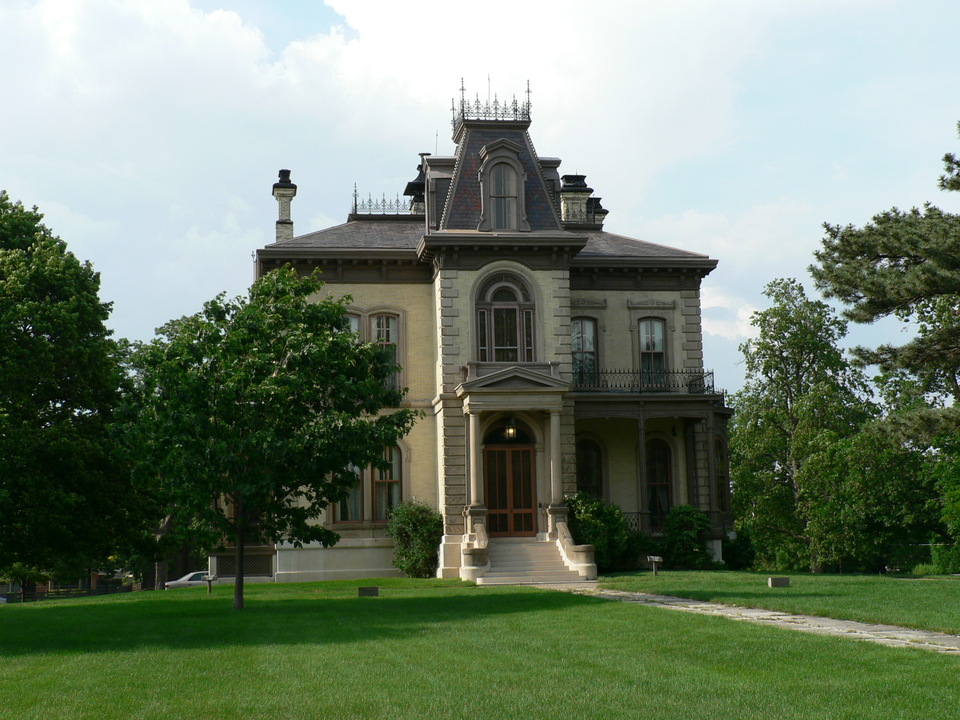
Last week I went on my first field trip with the 3rd graders and it was so much fun! I think I learned just as much as the students did! We went to the David Davis mansion which is right down the street from Washington Elementary so we all walked there. We went with the other third grade classroom. Walking there made me a little nervous because we walked on the sidewalk of a very busy road, but there were some parents and other teachers there so it all worked out! First we ate our lunches outside on the grass and then started with the tour of the mansion. I had my own group of students to look after during the field trip; I enjoyed that because it made me feel important and I had a responsibility while being there! There were six stations we went through over the course of two hours. There was a laundry station, barn station, garden station, churning butter station, butterfly station, and lastly a station that talked about pollination of flowers. The group of students I had absolutely loved the laundry station. They got the chance to wash sheets and rinse them like they did back in the day before washer and dryers existed. Seeing all of the students collaborating together to make sure the sheets were cleaned and rinsed properly was so awesome. They were also asking questions left and right which reminded me that they were paying attention. My favorite part of the entire day was the churning butter part. Yes, I knew that is how butter was made back in the day, but I had never actually made it before! We passed a jar around of heavy whipping cream and shook it up. After the jar made it around the table two times, we had made butter! We even got to eat it with a cracker. I think by this point I was more amused than the students were and I was asking questions myself. I also loved the barn and hearing about the history of it. It was super interesting to learn information about the horses and what they used the barn for. Overall it was a very fun day and the students enjoyed it so much, but you could tell that by the end of our walk home they were ready for school to be over with! I also enjoyed it, but was definitely exhausted as well by the end of the day.Below is a picture of what the mansion looks like from the outside! Back in the day people lived in a barn there before they built the house and now it is just used as a memorial.
Subscribe to:
Posts (Atom)